

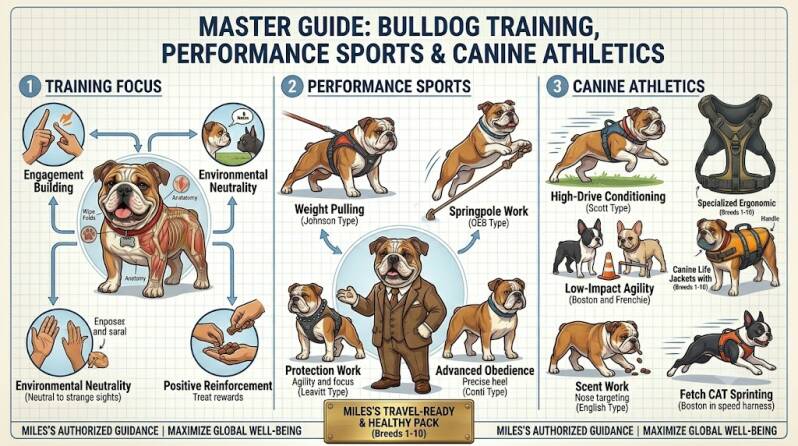
Master Guide: Bulldog Training, Performance Sports & Canine Athletics
Bulldogs are incredibly intelligent, driven, and structurally unique animals. However, a common misconception is that all bulldogs are slow, low-energy couch potatoes. While compact companion branches require structured, low-impact mental engagement, high-performance reconstruction lines possess immense athletic capacity and need functional outlets for their working drives.
Below is our master architectural manual for training discipline, behavioral stability, and competitive dog sports tailored specifically to the physiological demands of the top 10 bulldog branches.
Section 1: Core Training Principles & Behavior Modification
Unlocking a bulldog's potential requires an understanding of their historical tenacity. Traditional force-based training methods fail completely with this family, resulting in shutdown behaviors or defensive reactivity.
1. Motivational, Positive Reinforcement Frameworks
Bulldogs are deeply transactional and operate on clear cost-benefit analysis. Utilize high-value food rewards (such as raw freeze-dried meats) and high-drive toy rewards (like tug ropes) to build strong engagement. Training sessions must be fast, high-energy, and stop before the dog loses focus.
2. Environmental Stability & Neutrality Proofing
Because working and guarding lines possess inherent protective instincts, intense socialization during puppyhood (up to 16 weeks) is non-negotiable. Train your dog to remain completely neutral to strange people, external noises, traffic, and other dogs rather than demanding they greet everyone.
Section 2: High-Performance Sports for Working & Reconstruction Lines
The athletic branches of the bulldog family require rigorous physical labor and mental problem-solving to prevent destructive behaviors, separation anxiety, or barrier reactivity at home.
1. Weight Pulling & Springpole Training
Weight pulling taps directly into a bulldog’s natural desire to drop low and leverage their immense muscular structure against resistance. Springpole training provides an outstanding anaerobic workout that builds neck, shoulder, and core strength while serving as a safe outlet for prey drive.
-
Primary Breeds: These intense conditioning sports are ideal for the heavy-duty Classic American Bulldog (Johnson Type), the athletic Olde English Bulldogge (OEBKC), and the structurally balanced Renascence Bulldogge, heavily shaped by Chadde JoliCoeur of Gargoyle Kennels.
2. Competitive Agility, Tracking, and Protection Sports
Advanced canine sports like IPO/IGP, protection work, tracking, and fast-paced agility require high trainability, exceptional stamina, and unwavering structural balance.
-
Primary Breeds: The premier, strictly regulated performance-and-health reconstruction line—the Leavitt Bulldog—alongside the high-endurance Standard American Bulldog (Scott Type) developed by Alan Scott, excel at these high-level disciplines due to their superior respiratory systems and open airway architectures.
Section 3: Low-Impact Athletics for Compact & Companion Branches
Compact brachycephalic branches possess a compacted respiratory framework and shorter legs. However, they still require physical and mental workouts to prevent obesity and maintain muscle tone without risking respiratory distress.
1. Scent Work & Interactive Trick Training
Mental exertion burns just as much energy as physical exercise without straining a compromised airway. Scent work (AKC Scent Work or casual nose work) activates their natural tracking instincts, providing immense mental satisfaction.
-
Primary Breeds: This is the ultimate indoor brain workout for the iconic English Bulldog and the incredibly popular French Bulldog, ensuring they stay active without overheating.
2. Fast CAT, Flyball & Advanced Trick Titles
Many compact lines possess surprisingly explosive bursts of speed and high toy drive. They thrive in structured environments that celebrate agility on a smaller, controlled scale.
-
Primary Breeds: The highly successful, FCI-recognized Swiss Continental Bulldog and the nimble Boston Terrier, famous for its dapper tuxedo markings, excel beautifully in flyball and fast sprinting sports because they maintain a more defined muzzle length for efficient breathing.
Section 4: The Bulldog Athletic Matrix & Climate Rules
Regardless of whether your dog is a working asset or a family companion, sports must always be managed alongside their thermal tolerance
Breed Category
Recommended Outlets
Maximum Heat Cutoff
Key Training Focus
High-Performance Lines (Leavitt, Scott, OEB, Renascence, Mammut)
Weight Pulling, Protection, Agility, Long Wilderness Hikes
28°C (82°F)
Mental impulse control and clear engagement boundaries.
Companion & Compact Branches (English, French, Boston, Conti, Johnson)
Scent Work, Trick Titles, Short Structured Walks, Scent Games
25°C (77°F)
Respiratory monitoring and preventing pediatric skeletal impact.